Saroj Surkheti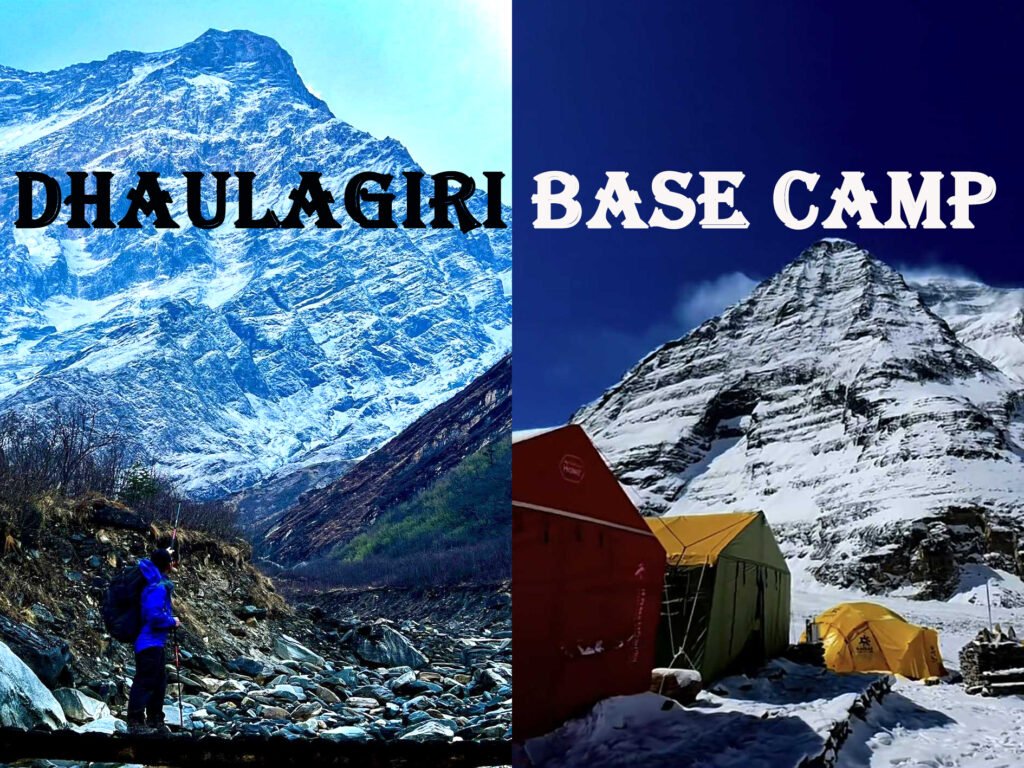
Dhaulagiri, rising proudly at 8,167 meters, is the seventh-highest mountain in the world and one of Nepal’s most striking Himalayan peaks. Its name means “White Mountain,” and it truly lives up to that — standing tall and glistening above the Kali Gandaki Valley. Known for its dramatic ridgelines and massive icefalls, Dhaulagiri has long been a symbol of challenge and beauty for mountaineers and trekkers alike. Unlike the more popular routes like Annapurna Base Camp or Everest, the Dhaulagiri region remains largely untouched, offering a rare glimpse of the Himalayas in their purest form.
I’ve trekked across many corners of Nepal, even Mount Fuji of Japan— from the bustling tea houses of Annapurna to the culturally rich trails of Langtang — but Dhaulagiri felt different from the very beginning. This isn’t a trek where you’ll meet hundreds of foreign hikers or stop every hour for Wi-Fi. Instead, it’s raw and silent, surrounded by unspoiled wilderness and the occasional whisper of wind sweeping through the valley. Every step felt like entering deeper into the heart of the mountains, far away from the modern world.
The Dhaulagiri Circuit is one of Nepal’s most challenging trekking routes, demanding both strength and resilience. As a Nepali who’s always loved the wild side of the Himalayas, I wanted to test myself physically and mentally on these rugged paths. What followed was a week of muddy trails, frozen mountain passes, laughter with fellow trekkers, moments of exhaustion, and endless wonder. In the end, it wasn’t just a trek — it was an experience that stripped away all distractions and reconnected me to the raw, humbling beauty of nature.
Dhaulagiri Circuit Trek Overview
- Duration: 9–12 days — shorter for the experienced, longer if you like to soak in every view.
- Highest Point: French Pass (5,360 m) — where the world seems to stretch endlessly in every direction.
- Difficulty: Challenging — steep climbs, high altitude, and rugged terrain test your endurance and spirit.
- Region: Western Nepal (Myagdi District) — far from the busier trails of Annapurna or Everest.
- Starting Point: Beni, a lively gateway town where the real adventure begins.
- Permits Required:
- Trekkers’ Information Management System (TIMS) Card for details
- Best Seasons: April–May for clear skies and blooming rhododendrons, or September–November for crisp air and crystal mountain views.
The Dhaulagiri Circuit isn’t just a trek — it’s a test of willpower and a celebration of wilderness. Every twist in the trail brings you closer to nature’s untouched grandeur, making it one of Nepal’s most rewarding high-altitude adventures.
Day 1: Kathmandu → Beni (830 m) — The Road to Nowhere
I left Kathmandu before sunrise, catching an early morning bus bound for Beni — a rugged little town near Pokhara that feels like the final outpost before the wild mountains take over. The 10-hour ride was long but far from boring. The road snaked along emerald hillsides, rivers shimmered beside us, and tiny villages appeared and vanished in the mist. Every turn revealed something new — a waterfall crashing down the cliffs, kids waving from terraced fields, and the occasional stubborn buffalo blocking our path like it owned the highway.
By the time we rolled into Beni at dusk, the air felt cooler, cleaner — a whisper of the mountains ahead. I checked into a cozy guesthouse run by a warm Magar couple who greeted me with steaming plates of dhal bhat and tender pork curry. After a long day on the road, that simple meal tasted like heaven. As night settled over the valley, I could feel the excitement building — tomorrow, the real adventure would begin.
Day 2: Beni → Babiyachaur → Dharapani (1,560 m)
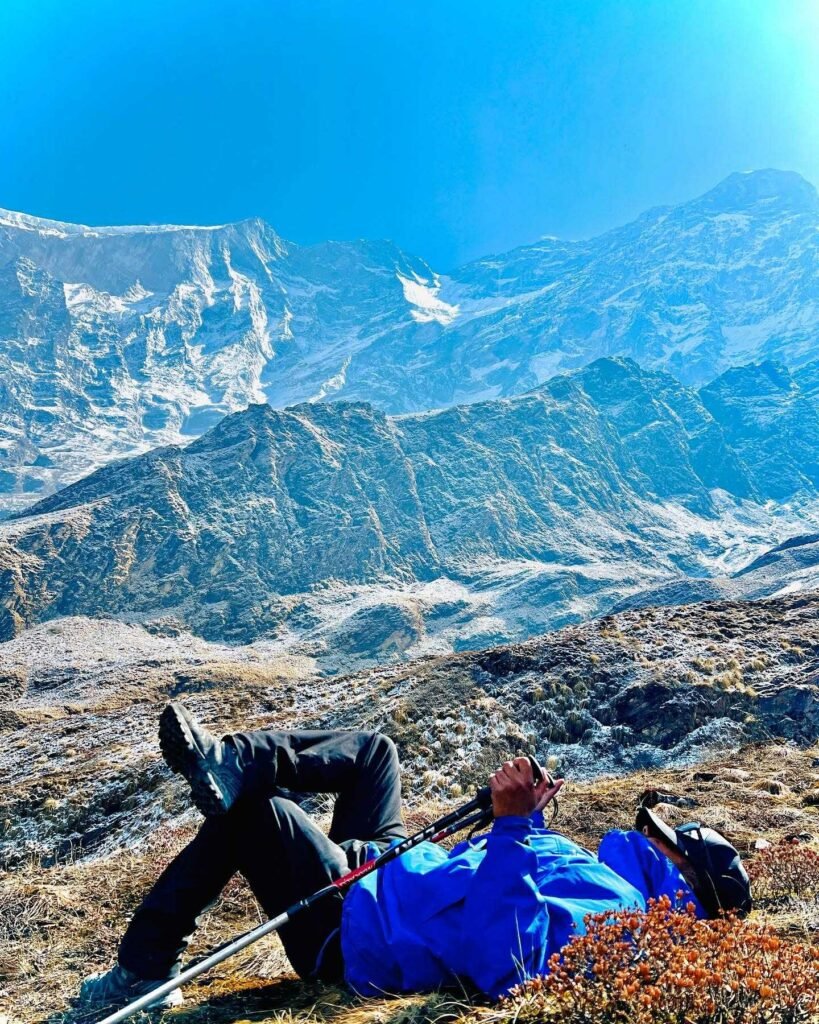
The trail began gently, tracing the banks of the Myagdi Khola River as it flowed through golden rice terraces and sleepy village paths. The air was fresh, carrying the earthy scent of wet soil and wood smoke from distant kitchens. Unlike the crowded trekking routes of Annapurna, this path was blissfully quiet — fewer trekkers, more genuine smiles. Every “namaste” felt personal, every encounter real.
At Babiyachaur, I stopped for a short tea break that turned into an unforgettable moment. A kind family invited me into their yard, where the grandmother proudly served steaming cups of tea and her homemade millet bread. “Most foreigners just walk past,” she laughed, her eyes bright. “But here, tea is mandatory!” I couldn’t refuse — and honestly, I didn’t want to.
By evening, I finally reached Dharapani, tired yet content. The clouds began to thin, and through them, the Dhaulagiri range appeared — silent, immense, and breathtakingly white against the fading light. It felt less like a destination and more like a calling, a promise of the wild beauty that still lay ahead.
Day 3: Dharapani → Muri (1,850 m)
Today was the first real test. The trail climbed steeply through forests, crossing small suspension bridges. Muri is a Magar village — simple homes, stone walls, and children chasing goats in the fields.
I met an old man in a camp named Ram everybody called him Ram dai, who had worked as a porter for Dhaulagiri expeditions in the 1980s. Over black tea, he said something I’ll never forget:
“Everyone climbs to conquer mountains. But Dhaulagiri doesn’t let you conquer — it lets you understand your limits.”
That night, as I sat under a sky full of stars, I felt that truth settle inside me.
Day 4: Muri → Boghara (2,080 m)
The forest became denser, the air cooler. The trail zigzagged through narrow ridges with deep drops on one side. Unlike Annapurna or Everest, this path felt wild — no cafes, no Wi-Fi, just pure nature.
By the time we reached Boghara, clouds covered the peaks, and a soft drizzle turned into snowflakes.
We stayed in a small camp — no lodges here, just tents and stories.
Day 5: Boghara → Dobang (2,520 m)
From here, everything felt remote. We followed the Myagdi Khola deeper into the valley. Sometimes the path vanished under landslide debris; sometimes it clung to a cliff barely a foot wide.
At Dobang, we camped near a yak pasture. Snow had begun to pile up on the surrounding hills. I sat by the fire, sipping ginger tea while our cook prepared dal bhat on a gas stove.
That night, I couldn’t sleep — not from fear, but from excitement. Tomorrow we’d see Dhaulagiri Base Camp.
Day 6: Dobang → Italian Base Camp (3,660 m)
This is where the scenery explodes into Himalayan drama. Forests give way to rocky slopes, and you start walking among glaciers. The first full view of Dhaulagiri’s south face hits you like a wave.
Massive, Pure white. Rising straight into the sky. At Italian Base Camp, colorful tents stood against a backdrop of ice and rock. The name comes from the Italian expedition that first climbed Dhaulagiri in 1960.
We cooked noodles with eggs and laughed about how this might be the most beautiful dining spot in the world.
Pro Tip: Stay hydrated — even though it’s cold, the dry air dehydrates you fast.
Day 7: Italian Base Camp → Glacier Camp (4,200 m)
The trail crossed a landslide zone, one of the trickiest sections. The path was narrow, icy, and unstable — a single wrong step could send you down the valley.
Glacier Camp sits between towering ice walls. The temperature dropped below freezing, and the stars that night looked unreal — bright, sharp, and endless.
It was silent except for the wind. I wrapped myself in two sleeping bags and fell asleep listening to the glacier cracking in the distance.
Day 8: Glacier Camp → Dhaulagiri Base Camp (4,740 m)
This was it — the big day. The climb was slow and steady through icy terrain. By noon, we reached Dhaulagiri Base Camp, surrounded by nothing but mountains.
No lodges, no villages — just pure wilderness.
Standing there, I could see Tukuche Peak, Dhaulagiri I, and endless snowfields stretching to the horizon. The silence was overwhelming — the kind that humbles you completely.
We set up camp and boiled tea. My fingers were numb, but my heart was on fire.
That night, I looked up at the Milky Way and realized: this trek isn’t about bragging rights. It’s about feeling small in the best possible way.
Day 9: Dhaulagiri Base Camp → French Pass (5,360 m) → Hidden Valley (5,000 m)
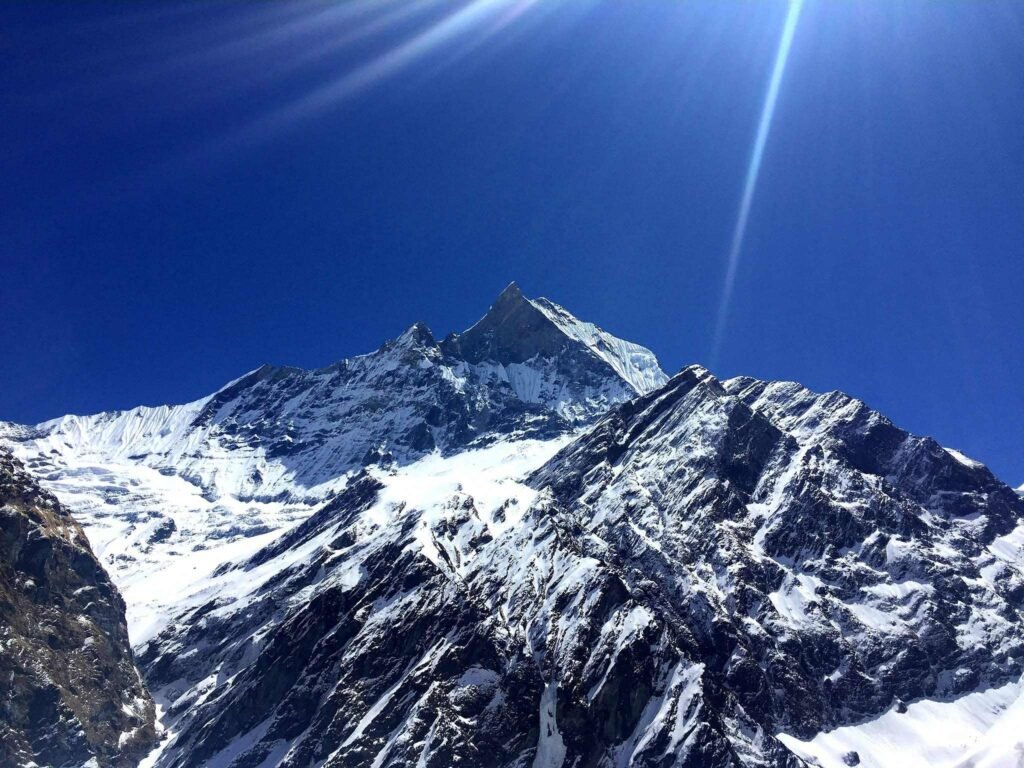
We left before sunrise. The trail to French Pass is long and tiring, but once you stand on top — it’s pure magic.
Below, glaciers twist like silver ribbons. Above, the wind howls through the prayer flags. On the horizon, you can see Annapurna, Nilgiri, and the endless ridges of Mustang.
Crossing into Hidden Valley, the landscape changes completely — a vast, dry plateau that feels like another planet.
I remember thinking: No photo can ever capture this feeling.
Day 10–11: Hidden Valley → Yak Kharka → Jomsom (2,720 m)
We crossed Dhampus Pass (5,200 m) on Day 10 and began descending toward Yak Kharka, a small pasture where yaks grazed lazily in the cold wind.
By the next day, the barren landscape gave way to trails lined with juniper bushes and stone huts.
Finally, we reached Jomsom, the first proper town in days. I had my first hot shower in a week, and it felt like heaven.
That evening, I sat at a local café, sipping coffee and watching planes land on the tiny mountain runway. The Dhaulagiri massif glowed orange in the sunset, and I felt a mix of pride and peace.
Dhaulagiri Circuit Trek Cost (Budget Breakdown)
| Expense | Approx. Cost (NPR) | Notes |
| ACAP + TIMS | 5,000 (for me free) | Mandatory permits |
| Transport (Kathmandu–Beni–Jomsom–Pokhara–Kathmandu) | 10,000–12,000 | Flights optional |
| Food + Camping | 20,000–25,000 | Basic but plentiful |
| Gear rental (sleeping bag, down jacket, poles) | 5,000 | Kathmandu or Pokhara |
| Total (Approx.) | 60,000–75,000 NPR | Budget-friendly for Nepali trekkers |
Packing Tips
- Warm gear is essential — temperatures drop below –10°C at night.
- Good boots are non-negotiable; trails can be icy or muddy.
- Carry energy bars, dry fruits, and thermos bottles.
- Power banks and solar chargers help — no electricity for several days.
- Always carry first aid and Diamox for altitude issues.
Local Insight
- Villagers are incredibly kind — greet them with “Namaste” or “Ramro din!”
- Respect local customs; some areas are sacred to Magar and Thakali communities.
- Carry small gifts or biscuits for children — they’ll remember your smile.
- If trekking solo, hire a local guide from Beni or Darbang. It supports the local economy and ensures your safety.
Reflections from the Trail
When people talk about Dhaulagiri, they talk about difficulty, altitude, and danger. But what they forget to mention is its purity — the feeling of being far from everything man-made, surrounded only by wind, rock, and snow.
For me, this trek was more than an adventure. It was a kind of meditation — every step stripping away noise until all that’s left is silence and gratitude.
On the last night in Jomsom, as I watched the moon rise over the mountains, I thought about Ram Dai had told me days earlier:
“Dhaulagiri doesn’t let you conquer it. It lets you understand yourself.”
He was right.
Dhaulagiri Circuit Trek Summary
| Day | Route | Altitude | Duration |
| 1 | Kathmandu → Beni | 830 m | 10 hrs |
| 2 | Beni → Dharapani | 1,560 m | 6–7 hrs |
| 3 | Dharapani → Muri | 1,850 m | 6 hrs |
| 4 | Muri → Boghara | 2,080 m | 6–7 hrs |
| 5 | Boghara → Dobang | 2,520 m | 6 hrs |
| 6 | Dobang → Italian Base Camp | 3,660 m | 7 hrs |
| 7 | Italian BC → Glacier Camp | 4,200 m | 5–6 hrs |
| 8 | Glacier Camp → Dhaulagiri BC | 4,740 m | 6 hrs |
| 9 | Dhaulagiri BC → French Pass → Hidden Valley | 5,360 m | 8 hrs |
| 10 | Hidden Valley → Yak Kharka | 5,000 m | 6 hrs |
| 11 | Yak Kharka → Jomsom | 2,720 m | 5–6 hrs |
Pro Tip
If you want to end comfortably, take a flight from Jomsom to Pokhara (25 minutes) instead of a 10-hour jeep ride. The views are spectacular.
Final Thoughts
The Dhaulagiri Circuit Trek isn’t for everyone. It’s tough, remote, and unpredictable. But if you’re looking for something real — a trek that challenges not just your body but your mind — this is it.
You don’t just walk around a mountain here. You become part of it — through struggle, cold, laughter, and quiet joy.
And when you finally stand beneath the massive shadow of Dhaulagiri, you realize:
Nepal’s mountains don’t just make you stronger. They make you simpler — and somehow, more alive.